
Running a Sex Offender Check in Claiborne Parish
The Louisiana State Police registry page routes users to the official parish selector, area search, email-alert service, unsubscribe function, and lawful-use agreement. Select Claiborne Parish there. The sheriff does not publish a separate local registry map or registry app, so the state portal is the public discovery channel.
Use the Claiborne Parish Sheriff's Office or LSP to verify a live detail. The official registry warns that information comes from DPS&C, courts, and local agencies and may not be complete, timely, or accurate. A current home, work, or school location should never be assumed solely from an older profile.
Selecting Claiborne Parish in the Registry
The portal first presents a lawful-use agreement. After acceptance, choose the parish route and use the control labeled “Search for Offenders in your area.” The research session confirmed parish choice, area search, email alerts, unsubscribe, and the “I Agree” control. The vendor blocked deeper inspection, so exact name, street, ZIP, and radius labels cannot responsibly be promised.
This limitation matters. Do not treat an unconfirmed field list as instructions. Follow the live labels shown on the official portal, choose Claiborne Parish where offered, and record the date of the search. If the portal fails, call the LSP registry unit at 800-858-0551 during its published 8 a.m. to 4:30 p.m. Central hours.
The LSP registry overview is the official starting page for Louisiana searches.
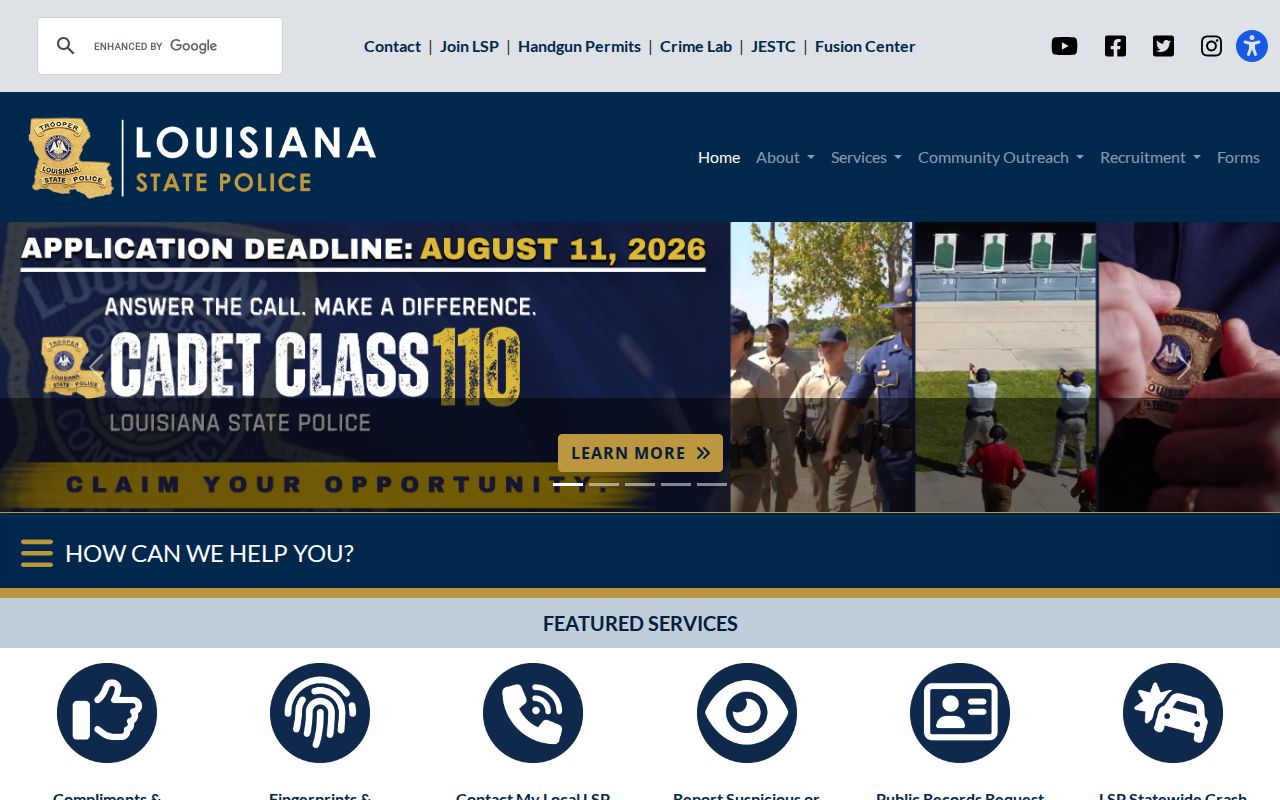
The live page should control because registry instructions and links may change after the image was captured.
Searching the Louisiana State Sex Offender and Child Predator Registry
Louisiana State Police administers the statewide public-notification system. It draws on information supplied by courts, corrections, and local registration agencies. A Claiborne Parish search should be treated as a dated snapshot that helps locate profiles for closer review.
- Open the official LSP registry route and read the conditions of use.
- Select “I Agree,” then choose Claiborne Parish or the available area-search control.
- Use only the fields shown in the live interface and review possible matches cautiously.
- Open a profile and compare aliases, physical description, offense, tier, and registering agency.
- Confirm a disputed or safety-critical detail with CPSO or the LSP registry unit.
| Field Label | Type | Required | Notes |
|---|---|---|---|
| I Agree | Agreement control | Yes | Opens search after the lawful-use warning. |
| Parish choice | Selection | For parish filtering | Choose Claiborne Parish when the live interface presents it. |
| Search for Offenders in your area | Search route | No | Confirmed official navigation label. |
| Register for Email Alerts | Alert route | No | Creates notifications through the statewide service. |
| Unsubscribe | Alert control | No | Stops a prior alert subscription. |
Verify Claiborne Parish Registry Details Locally
For a questionable address, status, or registering-agency entry, contact the Claiborne Parish Sheriff's Office at 613 East Main Street in Homer or call 318-927-2011. That office is the local verification and noncompliance route identified in the research. LSP can also assist at 800-858-0551 or socpr@dps.la.gov.
Describe the profile and disputed field without circulating sensitive information more widely than needed. A mismatch may reflect reporting time, a recent move, or an actual error. The official source, not a copied profile or search-engine cache, is the right place to correct it.
What a Registry Profile Shows
A public registry profile is designed for notification. Louisiana law and the official layout support the categories below. Because no individual profile was retained during research, exact display labels and address detail should be verified on the live record.
| Name & Aliases | Primary name and reported alternate names used to distinguish identities. |
|---|---|
| Photo & Physical Description | Photograph and traits such as height, weight, hair, eyes, scars, marks, or tattoos. |
| Registered Locations | Residence plus work or school information when the public profile supplies it. |
| Offense & Statute | Qualifying offense, legal citation, conviction information, and related jurisdiction. |
| Vehicle | Vehicle information reported for public notification where applicable. |
| Tier & Agency | Registration category, status, and the agency responsible for registration. |
A Registry Profile Is Not a Rap Sheet
The registry answers whether a person has a current Louisiana registration duty and provides statutory notification fields. It does not list every arrest, dismissed count, unrelated conviction, or full court history. A fingerprint Right to Review and a Claiborne Parish court case serve different purposes.
That distinction also affects interpretation. A profile can identify the qualifying offense and conviction without reproducing all pleadings or sentencing minutes. For the filed case and disposition, use the clerk's criminal record. For broader county record routes, the Claiborne Parish criminal history overview explains which custodian holds each stage.
Registration Requirements and Levels in Louisiana
R.S. 15:544 governs registration duration. Louisiana categories connect the offense definition to both the registration term and verification schedule. Use the state definitions rather than assigning a tier from a general federal description.
| Level / Tier | Duration | Verification Frequency |
|---|---|---|
| Tier I / other registrable offense | 15 years | Annual |
| Tier II / offense against a minor under R.S. 15:541(25) | 25 years | Semiannual |
| Tier III / aggravated offense under R.S. 15:541(2) | Life | Quarterly |
Claiborne Parish Area Alerts Without an App
The statewide registry offers a “Register for Email Alerts” route and a separate unsubscribe control. No Claiborne Parish sheriff registry app or app-only alert was found. Use the official registry subscription rather than assuming a general sheriff notification service tracks registry changes.
An alert is a prompt to review the official profile, not a substitute for it. Save the area or address exactly as the live form requests, keep confirmation messages, and revisit the portal when an alert arrives. The registry's timeliness warning still applies after subscription.
When Claiborne Searches Need NSOPW
Claiborne Parish sits near Arkansas, and Junction City spans a state boundary. The National Sex Offender Public Website is the official cross-state search layer when a location or movement may extend beyond Louisiana. It searches participating jurisdictions rather than replacing their source profiles.
Use Louisiana's registry for the detailed state record and local verification route. Use NSOPW to widen the geography. When either service returns a possible match, compare identifiers and open the source jurisdiction's profile before drawing a conclusion.
The official NSOPW service supplies the national search layer described here.
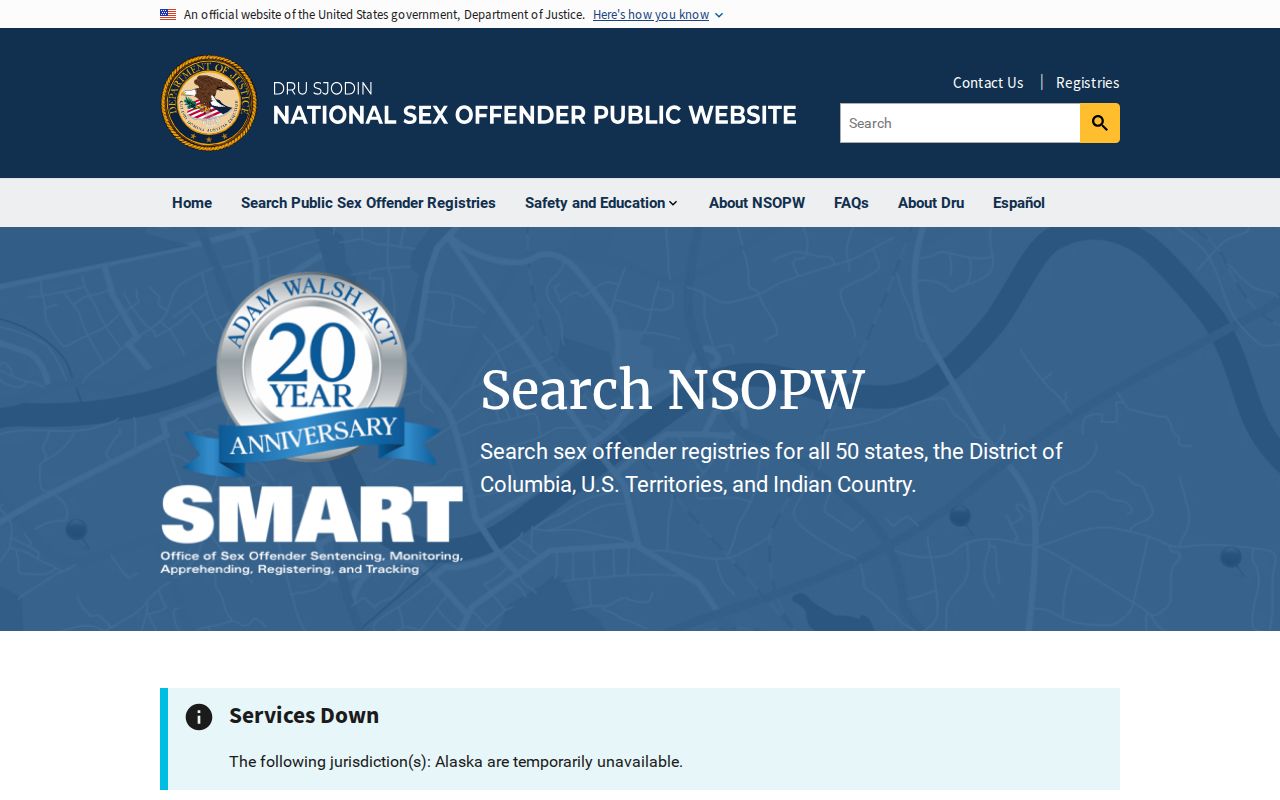
The national result is a routing aid; the originating state or local registry remains the source to verify.
Reducing a Fifteen-Year Louisiana Term
R.S. 15:544 provides a possible route for a qualifying 15-year registrant to seek reduction to ten years after maintaining a clean record, completing treatment, and filing the required motion. The result is not automatic, and the rule does not turn a public search into an eligibility decision.
Juvenile lifetime registration has a separate conditional reduction path. Anyone assessing their own duty should use the current statute, court record, and legal advice appropriate to the case. A missing public profile alone does not establish that a legal duty ended.
Lawful Use and Community Notification
Registry information supports awareness and practical safety planning. Louisiana's portal places lawful-use terms before the search and warns users to verify information. Email alerts extend notification, while CPSO and LSP remain the places to report possible noncompliance or correct an official detail.
Use registry information lawfully: Louisiana warns that threatening, intimidating, harassing, or otherwise misusing registry information may lead to criminal prosecution or civil liability under state law.